What New York Offices Are Eating in 2026: The FELFEL Food Trend Report
By the FELFEL Food Scouts
Let’s get one thing straight before we dive in: a hype is not a trend.
A hype is a short-lived spike of attention — usually manufactured on social media — that vanishes about as fast as it appeared. A trend is a lasting change in how people actually behave. The rule of thumb we keep coming back to: what goes viral on TikTok is usually a hype; what shows up in shopping carts and statistics is a trend.
1. Food as medicine (and pleasure), not calories
The biggest meta-trend of all: food should help you stay healthy and age well, not just fill you up.
Protein is the packaging promise of the moment — high-protein products quadrupled between 2013 and 2024[1], and the cottage-cheese revival is its friendly face[2]. GLP-1 weight-loss medications are the quiet game-changer: roughly 12% of US adults now take one, and their households cut food spending by 5–6%, mostly on salty snacks[3]. Supplements and functional drinks are moving collagen, creatine, and probiotics out of the pill and into sodas and snacks. The next push is fiber.
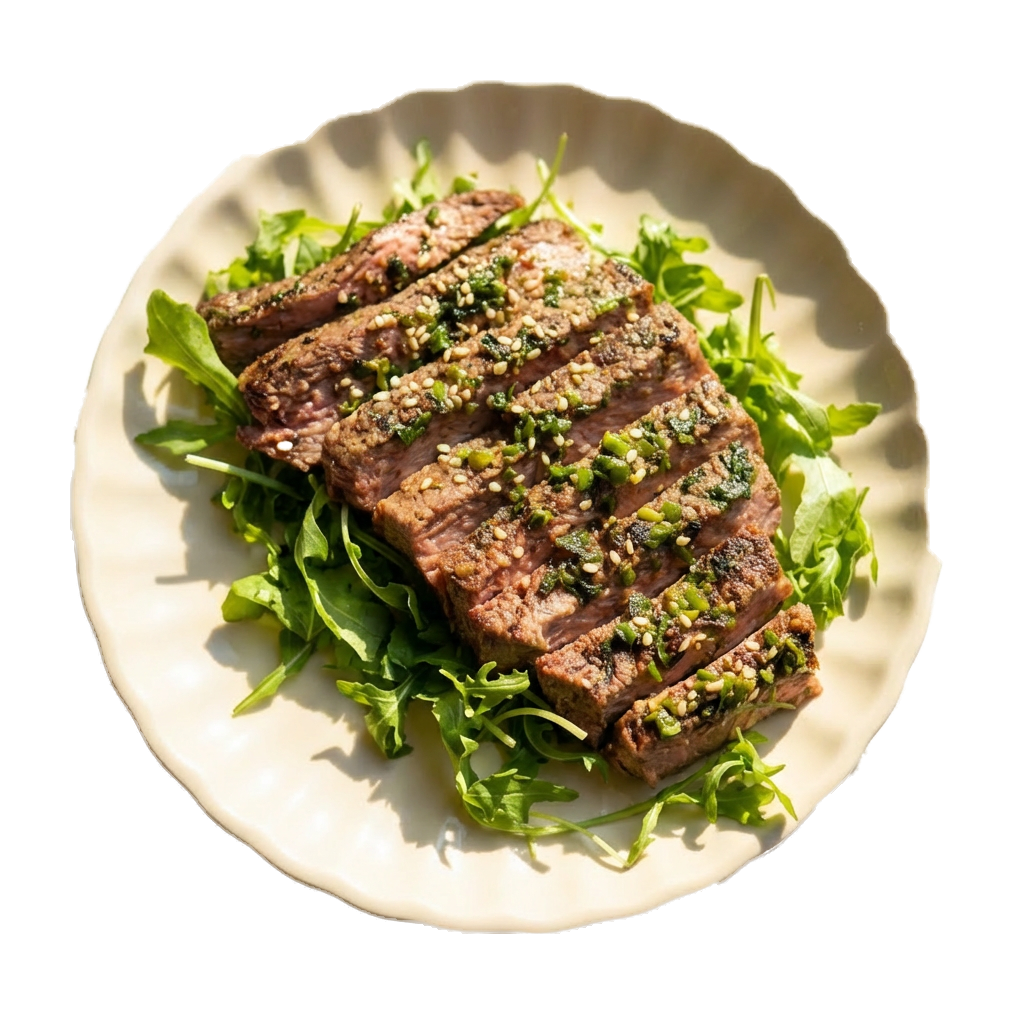
Protein Plates
Protein Plates have become FELFEL’s nr. 1 Selling Product in New York % Tri-State at the Corporate Offices we serve.
What it means for the office: The protein-and-function expectation now follows people to their desks. Lunch programs that offer visibly fresh, high-protein options — not only carb-heavy comfort food — read as caring about employee wellbeing. Functional drinks and lighter, GLP-1-friendly portion sizes are quietly becoming table stakes.
2. “Real” beats “artificial” beats “processed”
As a counterweight to the AI-everything world, the longing for romance, honesty, and “back to the roots” is growing fast: old recipes, nostalgic packaging, nothing anonymous and frozen.

A symbol for ‘homemade’
Sourdough bread gained mainstream popularity during COVID and has remained a favorite among U.S. consumers ever since.
Lab-grown meat is feeling the squeeze[4]. The flip side is the “grandmother” revival: from-scratch cooking, braises, sourdough, and home fermentation are booming, with Ballerina Farm and its millions of followers as the unofficial figurehead[5]. Visible human craft — open kitchens, hand-written daily menus — is becoming part of the promise.
What it means for the office: Employees increasingly distrust anonymous, ultra-processed catering. Freshly prepared food, visible ingredients, and a human story behind the menu land far better than industrial trays. Authenticity has become a workplace expectation, not a nice-to-have.
3. Food as a status symbol — including at the office
“You are what you eat” has become “you are what you post.” Dinner clubs, curated Instagram feeds, coffee with expensive clean design, olive oil with loud branding — food is now identity and distinction. Origin signals status too: the best pasta in Italy, the best cheese, the “right” dumpling. The extreme version lives at Erewhon in Los Angeles, where the “Hailey Bieber” smoothie hit around $20 and became a social-media pilgrimage site[6]. The everyday version is Graza, the squeeze-bottle olive oil that turned a pantry staple into a lifestyle purchase[7]. Either way, the message is the same: what you buy says who you are.
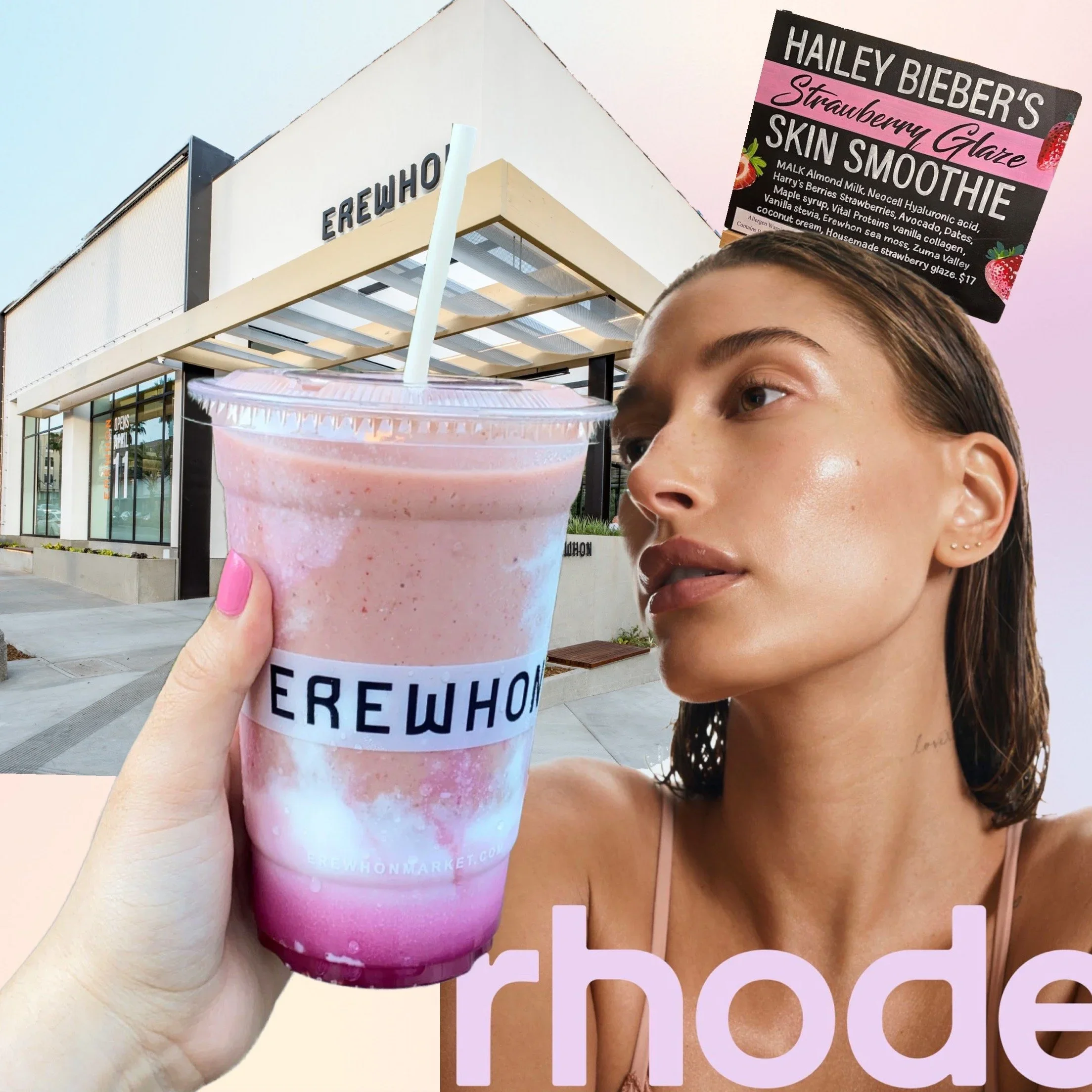
Erewhon stands for status
The extreme version lives at Erewhon in Los Angeles, where the “Hailey Bieber” smoothie hit around $20 and became a social-media pilgrimage site[6]
What it means for the office: Offering good food to employees is no longer just a perk — it is a signal. In a market where New York companies compete hard for talent, what you feed your team says something about how you regard them. A flimsy catering spread or a vending machine full of shelf-stable snacks communicates indifference as clearly as any Glassdoor review. The offices that understand this treat the lunch hour like the rest of the employee experience: considered, sourced well, and worth talking about. Food has become part of the employer brand, whether companies have said so explicitly or not.
4. “Free from”: less sugar, no gelatin, no dyes
From a deliberately boring point of view, this is one of the mega-trends we have been seeing for a while — and it is about individual ingredients. Less sugar, no animal gelatin, no artificial dyes. Innova calls “clean label” the new rules of the game: nearly one in three new products now carries a clean-label claim[8]. The US is driving it, with the FDA phasing out petrochemical dyes by the end of 2026[9].
What it means for the office: Clean-label scrutiny follows employees to work. Food with recognizable ingredients, less added sugar, and no artificial dyes signals respect — and pre-empts the questions health-conscious staff are already asking about what is in the office fridge.
6. Farm to Office
Closely tied to status, but its own movement: “where is it from?” increasingly beats “what does it cost?” In 2025, 73% of US consumers say ingredient origin is an important factor in where they eat, and more than two-thirds of diners aged 18–45 actively seek out restaurants that disclose their sourcing — up from roughly half in 2020. North America now accounts for about 36% of the global farm-to-table restaurant market, and small farms are projected to supply some 35% of restaurant ingredients this year, up from 12% in 2020[11]. America has its own protected-origin language, too — Napa Valley, Vidalia onions, Maine lobster, Idaho potatoes — where the place name itself is the quality promise. For producers, a credible origin story is now often worth more than a low price.
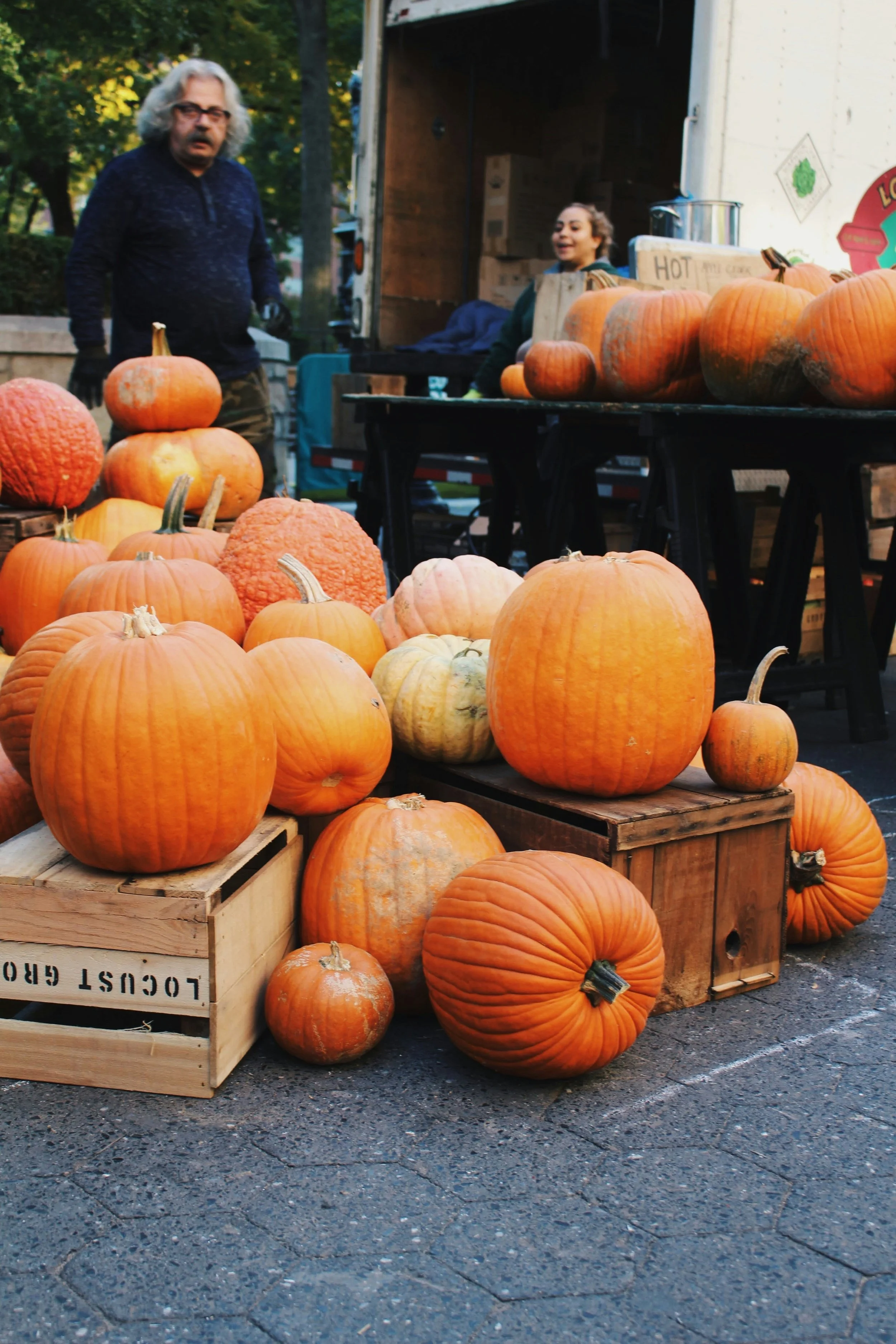
Union Square Market in NYC
You can see it most clearly at the Union Square Greenmarket, where up to 140 Northeast farmers, fishers and bakers sell directly to as many as 60,000 visitors a day — no middleman, the producer’s name on every crate[12]. Or take Jasper Hill Farm in Greensboro, Vermont: a family operation that ages its cheese in seven underground cellars carved into a hillside, supporting neighboring dairies whose milk it buys[13]
. You can’t lift that out and move it to a bigger facility — there is no cheese without the herd, the caves, the town. That’s what “local” means when people actually mean it: not a sticker that says regional, but a thing so rooted in one place that scaling it would simply kill it.
What it means for the office: Naming the farm, the chef or region behind office food turns a routine lunch into something employees notice and talk about. Local, traceable sourcing is a low-cost way to make a workplace food program feel considered rather than generic — and it gives staff an easy, positive story to share.
7. America’s chefs become supermarket brands
Most of these trends arrive from the US — nowhere clearer than Expo West in Anaheim, which drew over 64,000 visitors in 2025[14]. One concrete shift: chefs are becoming consumer brands on the shelf. ; David Chang sells Momofuku noodles and Chili Crunch; Daniel Boulud runs Épicerie Boulud[16].
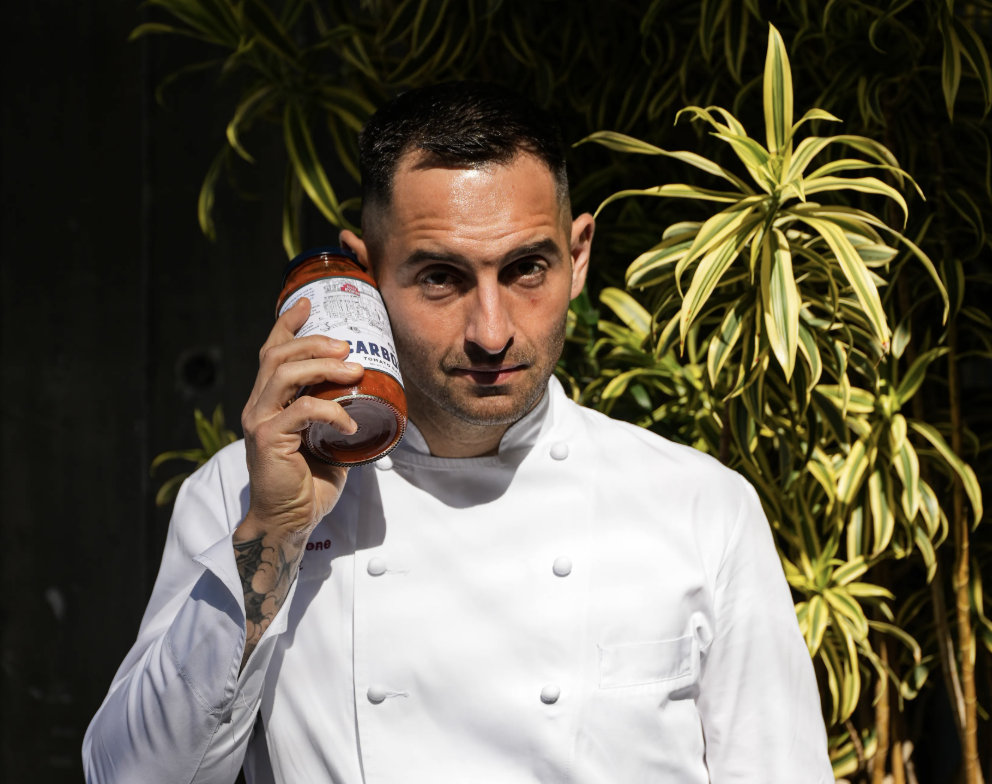
The Case of Mario Carbone
Mario Carbone’s “Carbone Fine Food” is targeting around $100M in revenue with 18 sauces in roughly 27,000 stores[15]
What it means for the office: The line between restaurant quality and everyday food keeps blurring. Employees who buy chef-branded products at the supermarket bring those same standards to the office — so “good enough for the canteen” is a steadily rising bar.
8. The packaging becomes the product
Where the US really wins is branding: loud, bold, photogenic. “Less plastic” has mostly failed as a selling point; the can is winning instead.
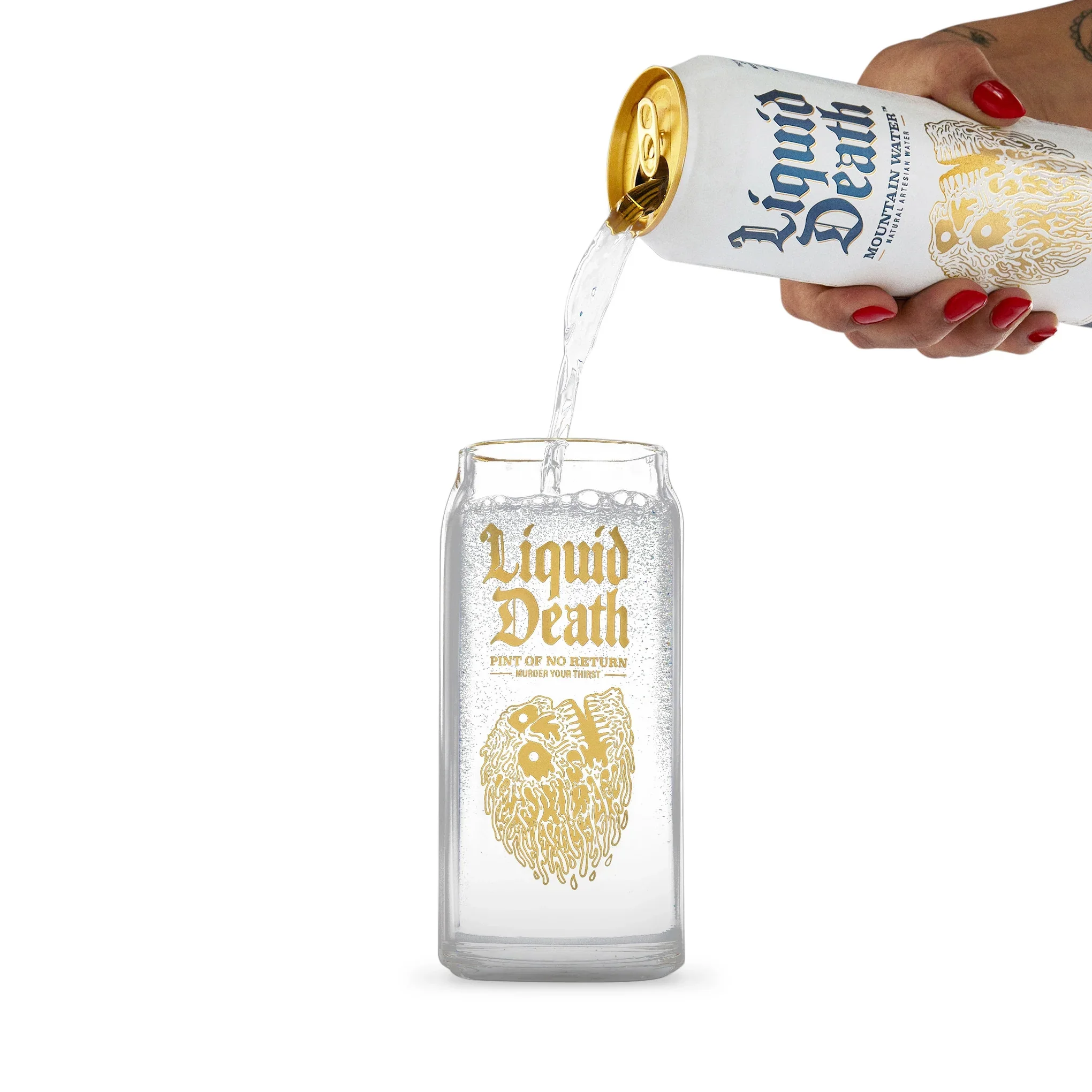
The poster child is Liquid Death — still water in a martial-looking beer can with the slogan “Murder Your Thirst,” valued at $1.4bn[17]. At its core it is water. What is sold is the attitude. The promise on the can moves more than what is inside.
What it means for the office: Presentation matters more than ever. Food and drinks that look considered — good design, clear labelling — shape how employees perceive the whole offering, sometimes more than taste itself. A well-presented fridge reads as a well-run workplace.
9. Specialty coffee arrives at the corporate office
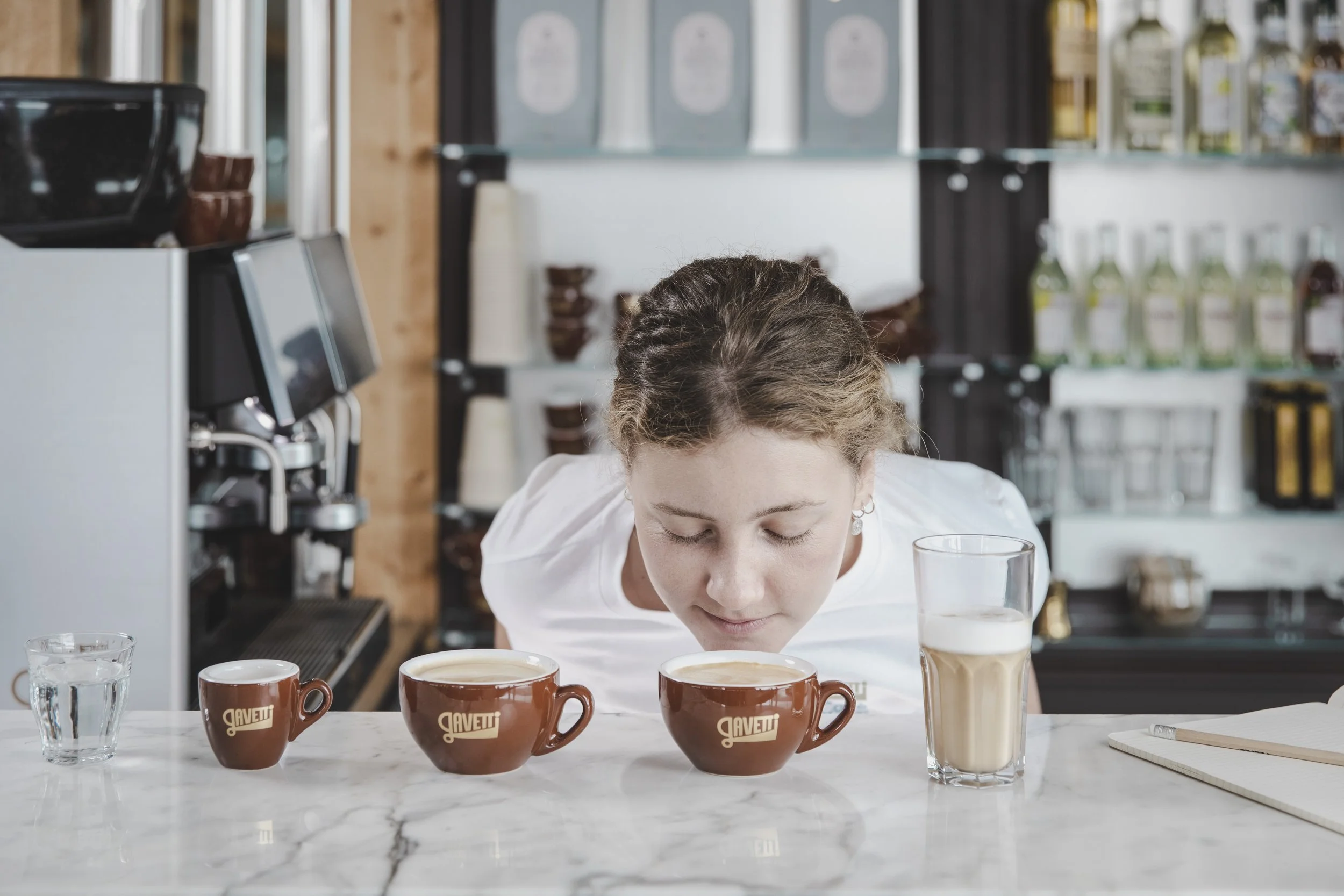
The “third wave” has arrived in the mainstream: the global specialty-coffee market is around $111.5bn in 2025[18], and roughly 45% of US adults drank specialty coffee daily in 2024, up from 25% a decade earlier[19]. Starbucks made the cortado a permanent menu item in early 2025[20]; matcha is booming as a “clean caffeine” alternative despite a supply shortage[21]. The café has become a lifestyle and status destination — a flat white, cortado, or matcha latte is simply the new normal.
What it means for the office: A vending-machine drip is now conspicuously below the standard employees set for themselves on the way to work. Quality coffee with fresh milk and oat beverages — and increasingly a matcha and cold brew option — has become one of the most visible signals of whether a workplace takes the everyday experience seriously.
The takeaway
The trends that last in 2026 are not the loudest ones. They are the quiet shifts toward real, functional, well-sourced food, told with a bit of human craft. And increasingly, those same expectations follow people into the office. New York employees eating at their desks are subject to the same food culture as everyone else — they notice the difference between something considered and something convenient. For the companies feeding them, that gap is an opportunity or a liability, depending on which side of it they sit on.
At FELFEL, that is the line we are always trying to draw: between the dish that trends for a week and the one people genuinely want to eat, week after week.
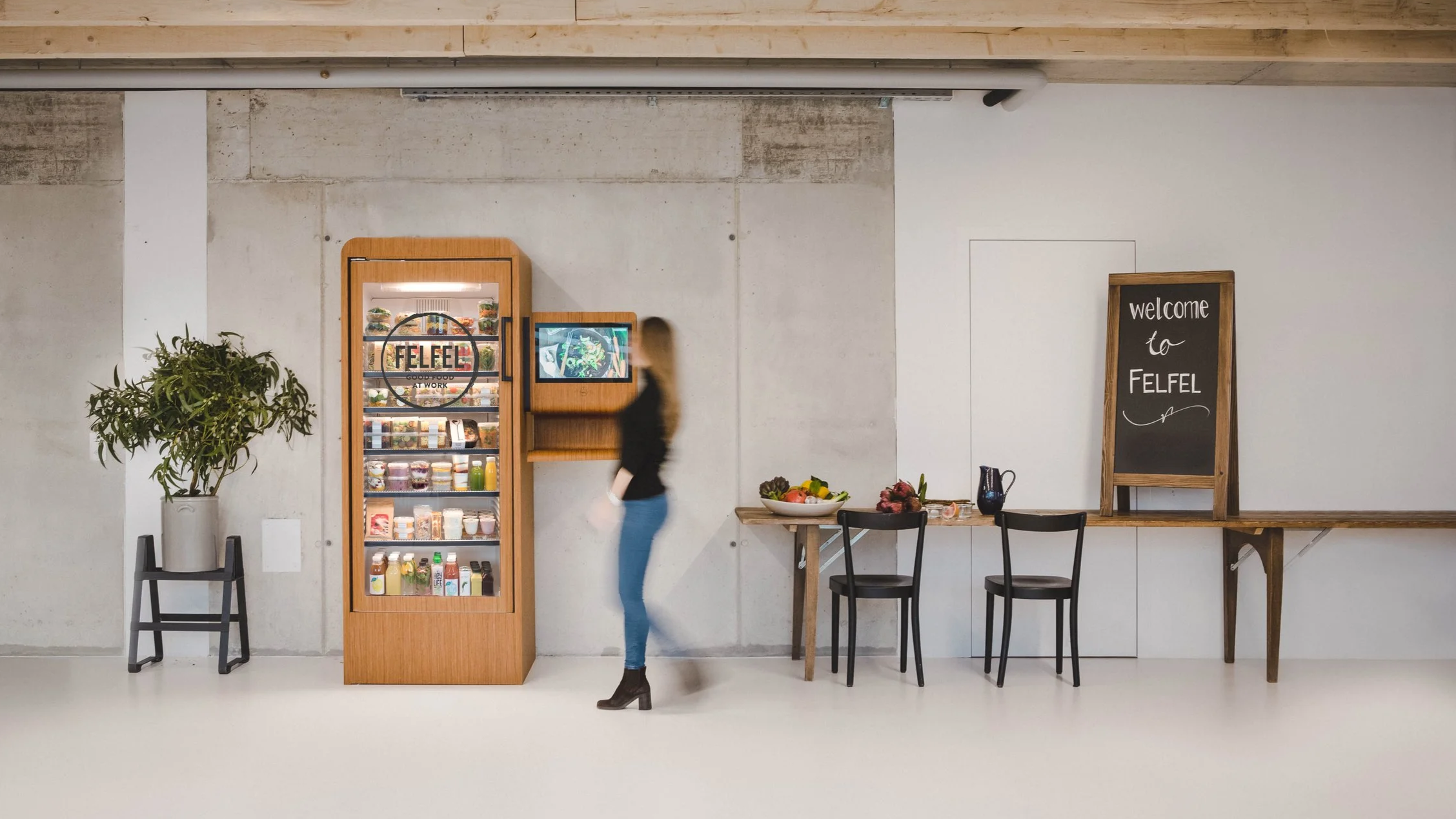
At the FELFEL Smart Fridge for Offices many trends are visible that are seen across New York.
Sources:
[1]High-protein product launches quadrupled 2013–2024 (Mintel); ~60% of Gen Z seek added protein (NielsenIQ): eMarketer; Cheese Reporter.
[2]Cottage-cheese revival, TikTok-driven, double-digit sales growth: CNN Business; Tetra Pak.
[3]GLP-1 use rose from ~11% (late 2023) to >16% of US households (mid-2024); grocery spend down ~5.3% (8%+ for higher-income), savory-snack spend down ~10% — Cornell / Journal of Marketing Research: Cornell Chronicle; Food Dive.
[4]Cultivated-meat investment collapsed from ~$1bn (2021) to ~$65M (2024); SCiFi Foods, Believer Meats and Meatable ceased operations: FoodNavigator; TechCrunch.
[5]Ballerina Farm / Hannah Neeleman — combined following ~18M+ across Instagram and TikTok as of 2024 and growing: TODAY; Wikipedia.
[6]Erewhon “Hailey Bieber” smoothie (~$20); name removed Nov 2025, price unchanged: KTLA; TMZ.
[7]Graza squeeze-bottle olive oil (“Drizzle” / “Sizzle”), launched 2022, now a top-5 US olive-oil brand: FoodNavigator-USA; Gambero Rosso.
[8]Innova: nearly 1 in 3 new F&B launches carry a clean-label claim: Innova Market Insights.
[9]FDA/HHS plan to phase out petroleum-based synthetic dyes by end of 2026 (announced Apr 2025): FDA; Venable LLP.
[10]Switzerland averages ~100g sugar/day (~2x WHO); under the Milan Declaration, sugar in breakfast cereals fell ~13% since 2018 (the broader FELFEL report cites ~40%; figures vary by baseline and product set): SWI swissinfo.ch; swissinfo (consumption).
[11]Origin/provenance now a top dining factor (~73% of US consumers); North America ~36% of the global farm-to-table market; small farms projected ~35% of restaurant ingredients (industry estimates): US Foods; Metrobi; Dataintelo.
[12]Union Square Greenmarket — up to 140 Northeast producers, tens of thousands of daily visitors: GrowNYC; Macaulay/CUNY NY Food Atlas.
[13]Jasper Hill Farm, Greensboro, Vermont — aging cellars and surrounding-farm milk model: Jasper Hill Farm.
[14]Natural Products Expo West 2025 (Anaheim) — record attendance, 64,000+: New Hope.
[15]Carbone Fine Food targeting ~$100M, 18 sauces in ~27,000 stores: Foodbeast; Food Dive.
[16]David Chang / Momofuku Chili Crunch and noodles; Daniel Boulud / Épicerie Boulud: Momofuku Goods; Épicerie Boulud.
[17]Liquid Death valued at $1.4bn (2024 financing round): Bloomberg; NBC News.
[18]Global specialty-coffee market ~$111.5bn in 2025 (CAGR ~10.8%): Grand View Research.
[19]~45% of US adults drank specialty coffee in the past day in 2024, up from ~25% a decade earlier (NCA/SCA): National Coffee Association; Specialty Coffee Association.
[20]Starbucks added the Cortado to its permanent menu, January 2025: Starbucks.
[21]Matcha shortage and sharply rising prices (Tencha up ~265% 2024–2025): Food Dive; Perfect Daily Grind.