What the DoorDash settlement means for office lunch in NYC
A worker-pay case raises a practical question for employers: how does lunch get to your office, and who does the work along the way?
On September 22, New York City announced a $131.5 million settlement with DoorDash over delivery worker pay. The city's Department of Consumer and Worker Protection (DCWP) says more than 260,000 workers were affected. For teams that order lunch to the office, the news is a reason to look past the menu and ask how the service operates.
What it means for the office: The protein-and-function expectation now follows people to their desks. Lunch programs that offer visibly fresh, high-protein options — not only carb-heavy comfort food — read as caring about employee wellbeing. Functional drinks and lighter, GLP-1-friendly portion sizes are quietly becoming table stakes.
“The figures: The $131.5 million is the total settlement, not a $131.5 million fine. The city says more than $115 million will go to workers and more than $16 million covers civil penalties and costs.”
What did the city find?
DCWP says the investigation began after workers reported missing or late payments. After examining DoorDash pay records, the agency found additional minimum-pay violations. It says certain trip and on-call time had been left out of the company's calculation of compensable work.
DoorDash acknowledged that mistakes led to some workers being underpaid or paid late. It disputed the city's position on how some on-call time should be calculated and agreed to settle rather than continue that dispute in court. The city's findings and the company's response are both part of the story. Read the reporting on DoorDash's response.
This was a city agency investigation, not a new case that began with Mayor Mamdani. The DCWP commissioner said it started under the previous administration and accelerated under the current one. Read the mayor's press conference transcript.
Lab-grown meat is feeling the squeeze[4]. The flip side is the “grandmother” revival: from-scratch cooking, braises, sourdough, and home fermentation are booming, with Ballerina Farm and its millions of followers as the unofficial figurehead[5]. Visible human craft — open kitchens, hand-written daily menus — is becoming part of the promise.
What it means for the office: Employees increasingly distrust anonymous, ultra-processed catering. Freshly prepared food, visible ingredients, and a human story behind the menu land far better than industrial trays. Authenticity has become a workplace expectation, not a nice-to-have.
What should an employer ask about office lunch?
The settlement concerns DoorDash's practices in New York City. It does not establish that every delivery service treats workers the same way. But if a company pays for daily lunches, it can ask any provider a few straightforward questions:
Who prepares, transports, and serves the food?
How are the people doing that work paid, and who employs them?
What does the quoted price cover, including delivery, tips, and service?
What happens on a day when half the team works from home?
Those questions also help facilities and HR teams compare the actual work behind different lunch programs, rather than comparing menu prices alone.
How FELFEL approaches office lunch
FELFEL puts a smart fridge in the workplace and stocks it every workday with chef-made meals from local restaurant and kitchen partners. Employees choose food from the fridge when they are ready to eat. The office doesn't need to place a group order each morning or coordinate a set of individual lunch arrivals.
Food still has to travel to the office. Our team and service partners handle stocking and upkeep, including cleaning and maintenance, as a managed program. For an employer, that means a regular service schedule and one monthly invoice rather than a fresh delivery decision each day. Subsidies can be set to fit the company.
This is one way to run workplace food. It suits offices that want meals available throughout the workday and prefer a stocked program to daily ordering. A one-off meeting lunch or an occasional team event may call for something else.
What it means for the office: Offering good food to employees is no longer just a perk — it is a signal. In a market where New York companies compete hard for talent, what you feed your team says something about how you regard them. A flimsy catering spread or a vending machine full of shelf-stable snacks communicates indifference as clearly as any Glassdoor review. The offices that understand this treat the lunch hour like the rest of the employee experience: considered, sourced well, and worth talking about. Food has become part of the employer brand, whether companies have said so explicitly or not.
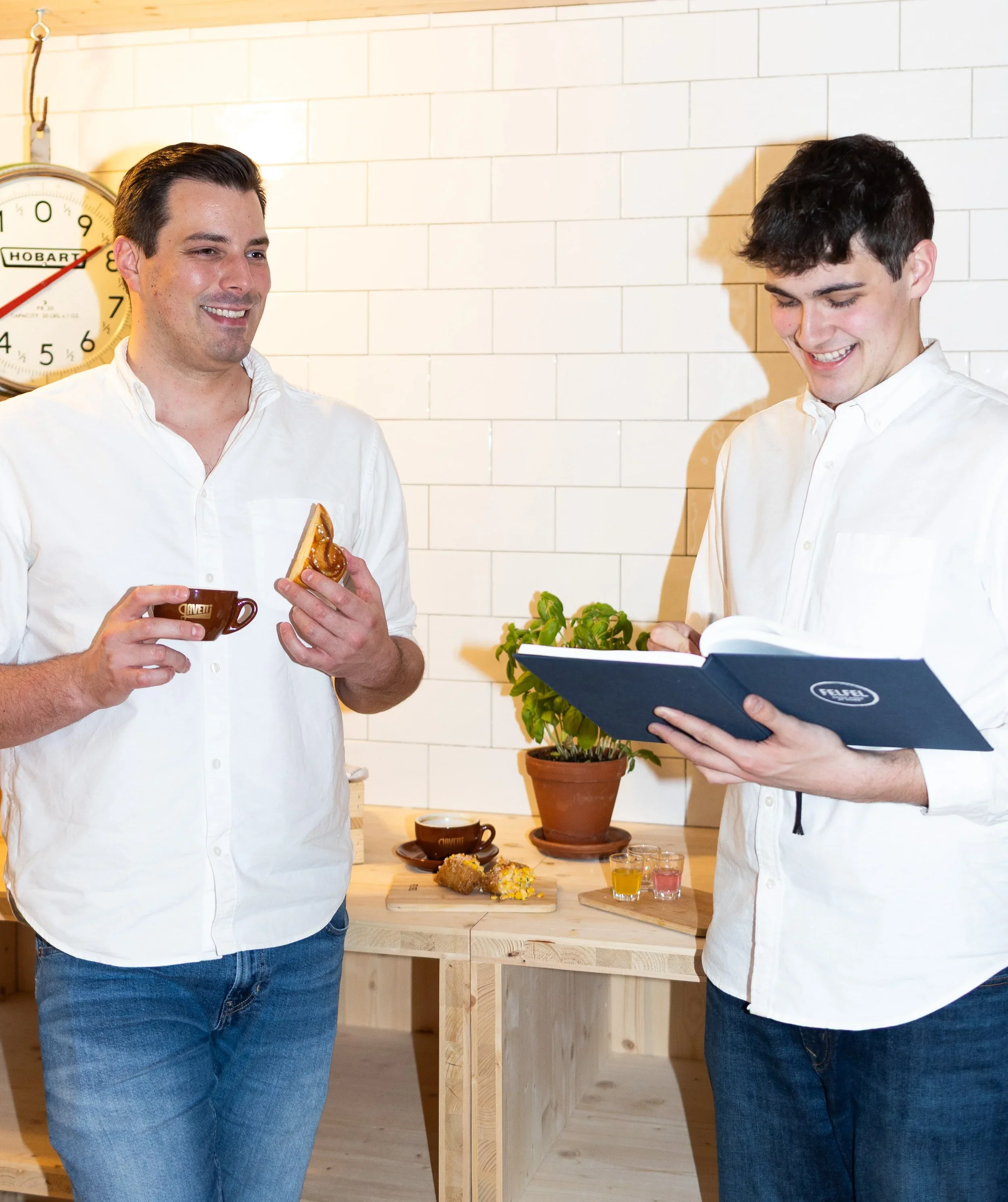
Ask us how the food gets there
If you're evaluating a workplace meal program, ask FELFEL who cooks the food, who stocks your location, how pricing works, and what happens when attendance changes. Those are fair questions for us, too.
Start with the food
You can see whether the menu suits your team before deciding on a program. FELFEL offers a free tasting at your office or its tasting room, with no obligation