Healthy office lunch: how to feed employees well at work. a 2026 guide
Short answer: A healthy office lunch program has four traits: food made fresh the day it is eaten, a balance of protein, fiber and whole-food carbohydrates, dietary options available every day (not on a rotating "vegan day"), and clear labeling so employees can choose without asking anyone. Most workplace food misses on at least two of these. A daily-stocked fridge of chef-made meals, such as FELFEL, is one way to meet all four without adding work for HR or facilities.
This guide explains what to look for, how the common formats compare, and how to evaluate any provider.
Why workplace food is usually not healthy
Employees spend most of their day at work, so the workplace shapes how they eat. The research on what is actually available is not encouraging.
A 2024 study in BMC Public Health analyzed lunchtime purchases from 378 employees across three worksite cafeterias at one large organization. The cafeteria menu scored 47.1 out of 100 on the Healthy Eating Index 2015, which the authors describe as a failing grade. Menu items scored below half the maximum on greens and beans, whole fruit, whole grains, dairy, seafood and plant protein, and sodium. This is one organization, so treat it as an illustration, not a national average.
The same paper notes that workplace foods in US surveys tend to be low in nutritional quality and energy dense, and that unhealthy diets are linked to lost productivity, absenteeism and higher healthcare costs for employers.
An older CDC-based survey of US workers (2013) found that among respondents with workplace vending machines, about 35% said healthy items were available.
The BMC authors also point to what works: improving food quality, labeling healthier options, and making healthy choices easier at the point of purchase. Those are program design decisions an employer controls.
What makes an office lunch "healthy"
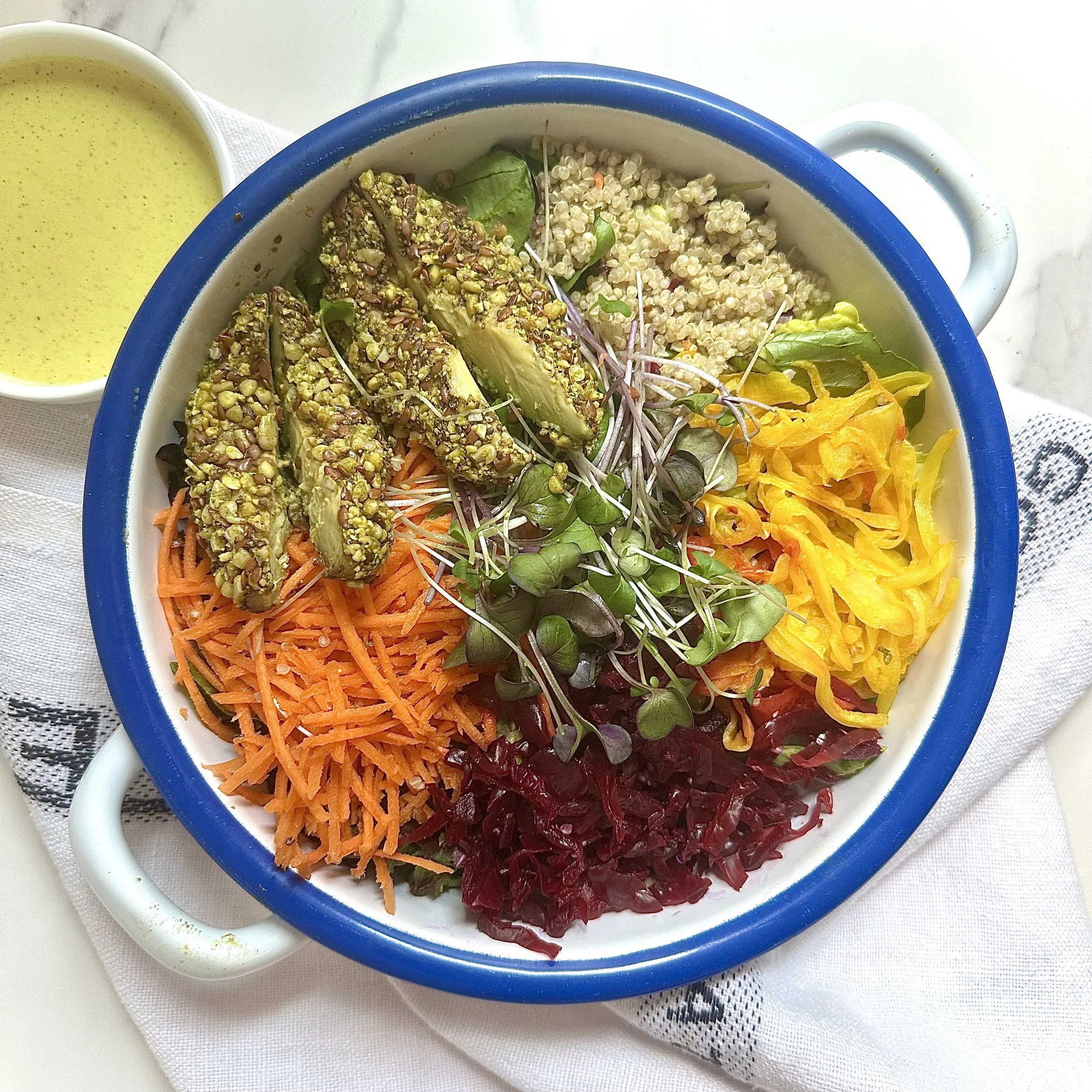
Use these five criteria. They are practical, and you can check each one with a provider before you sign.
Freshness. Meals prepared the same day, not frozen, shelf-stable or reheated from a week-old batch.
Balance. Protein, fiber and whole-food carbohydrates in every meal, with vegetables and whole grains on the menu daily.
Dietary coverage every day. Vegetarian, vegan, gluten-free and dairy-free options available on every working day.
Transparency. Ingredients, allergens and dietary tags labeled clearly at the point of choice.
Variety. A menu that changes often enough that people keep eating from it. A healthy meal nobody eats does not help anyone.
12 healthy office lunch ideas that employees actually eat
If you plan your own program or brief a caterer, these formats tend to work because people can customize them.
Bowls and salads
Grain bowls with a lean protein, roasted vegetables and a whole grain such as farro or brown rice.
Mediterranean bowls with hummus, chickpeas, cucumber and olives.
Poke bowls with fish or tofu, rice, edamame and vegetables.
High-protein salads with eggs, chicken or legumes, instead of a lettuce-only salad.
Super-green wraps with avocado, greens and a plant or lean protein.
Sourdough sandwiches with a protein filling and a vegetable side.
A deli classic like a pastrami sandwich, offered alongside lighter choices. A healthy program has range, not a single food philosophy.
Vegetarian and vegan mains that are a meal in themselves, not a side dish.
Gluten-free and dairy-free mains available every day.
Fermented sides such as kimchi or pickled vegetables for gut-friendly variety.
Cold-pressed juices, smoothies and health shots.
Fruit, nuts and low-sugar snacks within arm's reach, so the afternoon snack is not a candy bar.
How FELFEL approaches healthy workplace meals
FELFEL puts a smart fridge in your office and stocks it every workday. This is how its program lines up with the five criteria.
There is no ordering, headcount collection or cleanup for your team. Employees unlock the fridge with the app, and the platform handles billing and subsidies.
Fresh: Meals are cooked in real restaurant kitchens the morning they are eaten and delivered before employees arrive. They are not frozen or shelf-stable.
Balanced: Menus are built around protein, fiber and whole-food carbohydrates, with options from a green bowl to a deli sandwich, so employees are not pushed toward one way of eating.
Dietary options every day: Vegetarian, vegan, gluten-free and dairy-free options are available each day.
Labeled: Dietary information is clearly labeled, and the menu is visible in the FELFEL app.
Varied: A new curated menu arrives each Monday, drawn from a library of 1,000+ recipes. Partners include chef Ivan Orkin of Ivan Ramen and Silvia Barban, plus vegetarian restaurant Le Botaniste.
Seasonal: Menus shift with the season, such as stone fruit and tomatoes in summer and squash and root vegetables in fall.
Safe: Fridge temperatures are tracked in real time, and the fridge is checked, cleaned and restocked every workday.

A checklist for evaluating any healthy lunch provider
Ask these before you sign:
When and where is each meal made? Can I see the kitchen or the supplier?
How many dietary options are available every day, not just some days?
How are allergens and dietary tags labeled?
Can I see a full week of menus, and how often do they change?
Are nutritional details available for the meals?
How is food safety managed, including temperature monitoring?
What happens to unsold food?
Can I see consumption data so I can check what employees choose?
How are subsidies handled if I want to cover part of the cost?
If a provider cannot answer the first three in writing, the "healthy" claim is a marketing line.
How to get employees to choose the healthy option
The BMC study found that healthy eating promotion may need to fit the workforce, and that changing the food environment improves meal quality for everyone. In practice:
Make healthy options the default. Place them first on the menu and at eye level.
Label clearly. Employees pick better when they can see what is in a meal.
Subsidize selectively. Covering part of the cost keeps participation high.
Keep the menu fresh. Rotation prevents menu fatigue.
Review the data. Look at what is chosen and adjust the menu instead of guessing.
The takeaway
A healthy office lunch is a design problem, not a slogan. Check freshness, balance, daily dietary coverage, labeling and variety, and ask providers to prove each one. Pair that with a format that removes admin from your team, and participation tends to follow.
Want to see what a healthy daily lunch program would look like for your office? Talk to FELFEL.